Nu Nunuk du Tukon
AS SUNG BY LAJI SINGERS MELECIO ALASCO, ROSITA ALAVADO
Nu nunuk du tukon, minuhung as kadisi na,
ichapungpung diya am yaken u ñilawngan na.
Kapaytalamaran ava su avang di idaúd,
ta miyan du inayebngan na, ta miyan du inayebngan na.
Nu itañis ko am nu didiwen ko
ta nu taaw aya u suminbang diyaken,
nu maliliyak a pahung as maheheyet a riyes
u minahey niya, u minahey niya diyaken.
The Nunuk on the Hill
The nunuk tree on the hill grew tender leaves and shoots,
then suddenly its crown was broken and I was caught beneath.
Now I can no longer watch the boat in the deep sea
for I stand on the side that is hidden, on the side that is hidden.
I weep in my sorrow
for the vast ocean has made me an orphan,
the pounding sea breakers, the strong currents,
they told me of my fate, they told me this.

U Anak Nu Munamun
AS SUNG BY LAJI SINGER FILOMENA HUBALDE
Anu kadawudawung ku du tukun di Valungut
Dawri a dinungasungay u anak nu munamun,
Ahapen ku na siya nu masen a sahakeb,
Dahuran ku na siya du mahungtub a duyuy,
Udiyan ku na niya a payrakurakuhen
A di chu’a pavulsayi su madahmet a chirin
Du kahawahawa ku niya u kaichay nu anak nu munamun.
The Child of the Munamun
Each time I look down from the hill at Valungut
I see the child of the munamun swimming in the waves,
I will gather her in my finest net
and place her in the deep coconut shell,
to take her home and care for her as she grows.
I will not utter a single harsh word
and take great care not to hurt the feelings
of the child of the munamun.
Laji is the traditional oral poetry of the Ivatan people of Batanes. These poems are new translations into English of the traditional poetry, as sung by the elder singers, who deserve full credit for being the original culture-bearers of this indigenous art form. Both of these lajis were sung in my presence as I recorded the singers and spoke with them about their craft. They generously granted me permission to share their lajis with the broader public. These were first published in Manoa Journal (December 2024). Please visit our ongoing community-based project on documenting and preserving laji at ivatanlaji.com.
Tanaga du Ivatan (Asa, Dadwa, Tatdu, Apat)
Tanaga is a traditional Filipino form of poetry. Each poem is composed of four lines, seven syllables per line, with various end-rhyme patterns. This is an excerpt from a series, titled simply Asa, Dadwa, Tatdu, Apat (One, Two, Three, Four), that uses Ivatan poetic language in the Tanaga form. Originally published in Manoa Journal, December 2024.
Tanaga du Ivatan: Asa
Masalawsaw sicharaw
Malatyat ‘changuriyaw,
Navuya mu u hañit?
Nadngey mu u valichit?
The day is full of wind
As a new dawn arrives,
Have you seen the brightening sky?
Have you heard the valichit sing?
Tanaga du Ivatan: Dadwa
Sumavusavung da na
U dadwa ka bayakbak,
Nu minaydak a chidat
Asa yatus vituhen.
The two bayakbak trees
are flowering:
a lightning bolt flashes,
a hundred bright stars.
Daybreak

Stepping into the smoke
that climbs the mountainside
carrying in its jaws the memory of fire
we vanish
stars flicker where
the sky’s blue dome
catches the smoldering mast
then emerge cloaked in silver ash
the sun’s rays lancing our throats into beads of flame
as we chant the world
into daybreak and dreams.
We found signs in the entrails of wild boars
as our holy women read the slaughter
that darkened the tips of their fingers red
and manacled their wrists in scripture
we chose to live even though
we knew enough of what was to come
or at least what we would become
in order to witness their arrival.
Let me tell you how it begins—
our children run from the shoreline
chased by the last trace of starlight in the sky
my daughter turns to me
cupping a spear of moonlight in her small palm
samurang
our footsteps pursued by echoes
as we leave the shallow mouths of coral
empty in our wake.
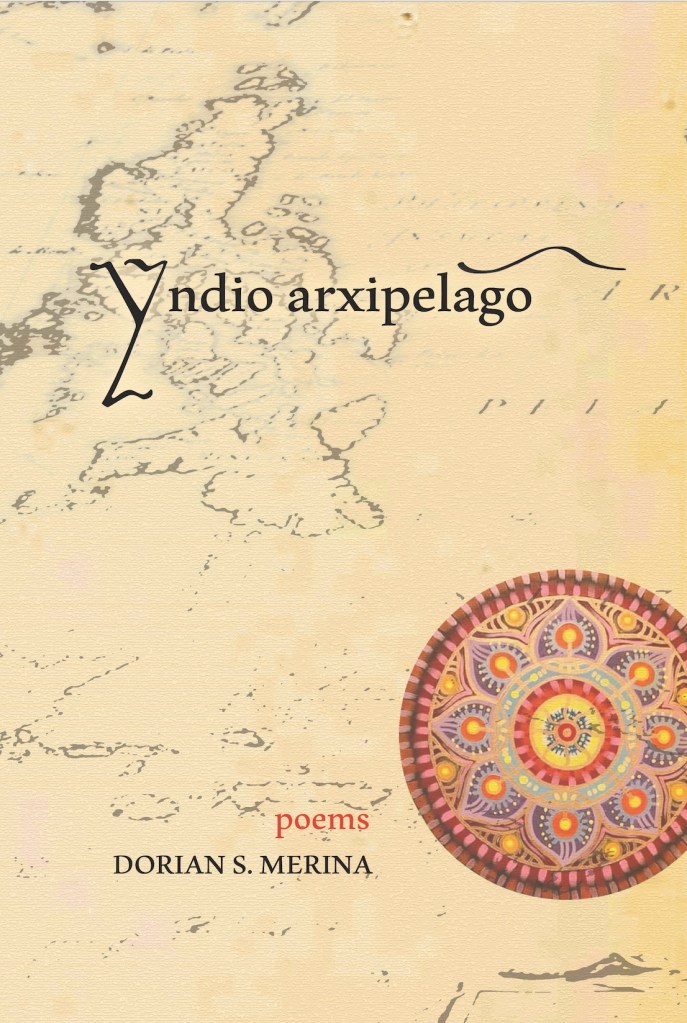
From yndio arxipelago (UP Press, 2025); art by Jay Pee Portez, from “Harvest”
New Book of Poetry: yndio arxipelago
“A wondrous, fierce braiding of history, authority, and rebellious art. Merina’s poetic voice summons a necessary dignity for oppressed peoples of the past, bringing this balm of a book to our haunted present.”
—Laurel Flores Fantauzzo, author of The First Impulse
Out now from the University of the Philippines Press!
“In this luminous collection of poems, Dorian Merina invites us to sift through the colonial archives to discover who we were before conquest. With each line, he draws us into a journey not toward certainty but toward the unsettling truths buried in silence and omission.”
—SHEILA S. CORONEL, co-founder of the Philippine Center for Investigative Journalism
“yndio arxipelago is a dazzling provocation drawing readers into the intimacies of the first colonial encounters between the Philippines and an emerging Spanish-speaking world…[Merina’s] verses, crisp and riveting, allow us to listen in to historical conversations, experience a scriptworld shifting from the baybayin to Castilian, and share in the internal struggles of a people on the brink of a cultural upheaval.”
—MARLON JAMES SALES, Associate Professor of Spanish, University of the Philippines and Secretary of The Society for Early Transpacific Studies
View and purchase the book via UP Press.
CREDIT: The header image on this page is from the beautiful artwork of José Honorato Lozano, one of his mid-19th Century paintings depicting Ivatan fishermen.
For My Cousins Who Will Choose Who They Are
FOR MY COUSINS WHO WILL CHOOSE WHO THEY ARE
running home this evening
I look for the san gabriels
to find only
a faint line above the haze
a razor-black definition
of home running
and, before I can help it, my mind
rushes in
fills the rest with detail and reference
so that I see
as if in mid-earthquake
a perfect memory of a mountain.
I tell you this, cousins, because you too
will find your landmarks
this way,
you too will find yourself
listening to others
on the bus in school on t.v.
who will tell you, “You can choose
who you will be
you have the responsibility
to see it this way.”
***
what chose who blood
passages over the dark-rain ocean crossing
the border-blister heat
to arrive
find that address in the suitcase
stolen
***
there is in you
hot blood
cool blood
island blood
lovers blood
tribal blood
white blood
hungry blood
city blood
american blood American blood AMERICAN blood
***
it is twenty-eight day since Grandpa die
we used to eat chilled plums from buckets
drink coke and play ping-pong
in the backyard
one of his countrymen once said,
America
is in the Heart
this after years and years away
from the mountain on the island
***
we will be mis taken
for everything
we will learn to trade the landmarks
for pictures of ourselves
we will be tempted by the temporary ease
of forgetfulness
but, my cousins, after years of pretending
to choose
we will learn: we only know how
to discriminate
you will find yourself
suddenly alone with no easy choices
nothing gets better
once it is gone
or taken
or given
you cannot get it back in one piece
not in one lifetime
so I give you no caution
just a cool eye in the hurricane
just a hot eye in the field
there is something
no one has told you
go to it
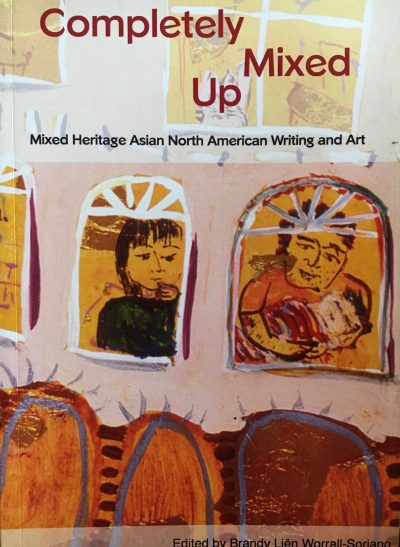
from Completely Mixed Up: Mixed Heritage Asian North American Writing and Art (edited by Brandy Lien Worrall-Soriano, Rabbit Fool Press, 2015)
The Change Giver
THE CHANGE GIVER
The Change-giver drops four pisos
into my hand
swivels hips sideways
calls out the next stop
Ortigaaaaaaaaaaaaaas
one hand worrying the frayed edge
of a trouser pocket
switching back and forth
coin against the railing
one click means stop
two clicks go
sige dire-diretso hangang sa dulo
The Change-giver paces the small spaces
from Q-mart to Quezon Ave.
feet collecting strips of sun like geckos’ tongues
calling their rattling call in the night
The Change-giver paces the small spaces
between engine-floor to back door
gliding between aisles of torn Salita pages
spit and celphone cards
towel moistens the temple’s soft skin
the clutch gives
rocking wheels
into forward motion
The Change-giver has seen
four-hundred twenty-eight pisos
cross the pockets aisles and fingernails
seen three times already
the slow opening of gates
at city hall
seen the boarding and slipping off
of passengers before dawn
seen the slow crunch of taxis
jeeps and tricycles loosen
into steam-filled streets
moving in one flip
in one toss
the tickets fanned to the blanket of precision
holding in one fist
the day’s slowly burning silence
One-click two-click one-click two
in a flash five centuries of stop and go
five centuries of letting go
five centuries of circling a foreign architect’s dream
of agreement
One-click two-click one-click two
the signals of memory smoking through the sheen
of metal and coin
finger and cloth
One-click two-click one-click two
the stuttering accent of hybrid languages
smoothed to silence
carved from roughness
One-click two-click one-click two
we stop we listen
our tongues
our mouths
our eyes
our hands
the sun clears the billboard on EDSA
fills the window with light
the Change-giver is braced between seats
turning coins into dreams
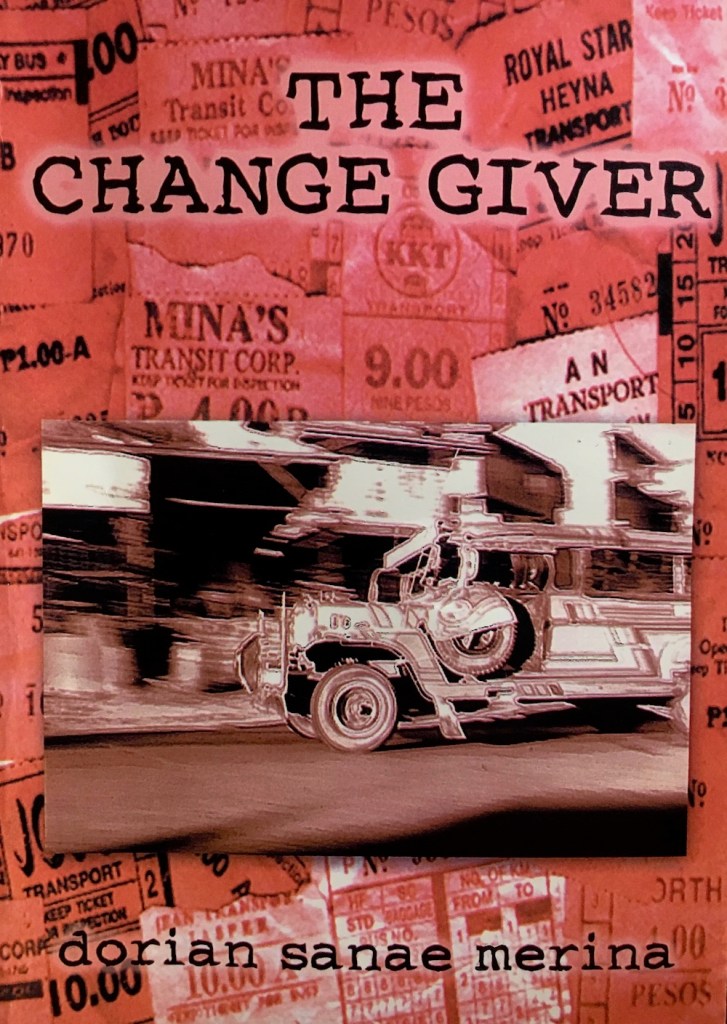
From the chapbook, The Change Giver (Rosela Press, 2003)
Migrations

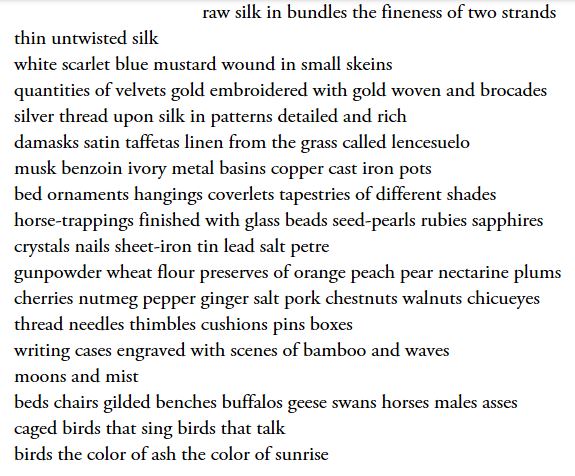
Collaboration with visual artist Alyssa Sherwood, commissioned by the City of Pasadena. Read the entire poem here at the Poetry Foundation.
Exile
EXILE
They were exiled
for half a century
from the island
the ocean became
a deep and treacherous
border cut into the land.
The punishment imposed
by Spanish officials
a consequence for insurrection
certain as the fine embroidery
on the priest’s frock ironed hot
and flat for mass.
Even so
some were driven back
by hunger or loneliness
to the green hills
and the damp forests
but always to leave
by nightfall
with dreams of home
fading like salt spray
against the boatsides.
When it was finally over
many did not return
for the passage of time
takes its toll
and heartbreak runs through
generations like
a thirst quenched by water
pulled from the bitter gourd.
The ones who did return
gathered stones and lime
from the shoreline
brought down wood from the hills
and built the homes
where we now live.
This was all more than one hundred eighty years ago
and tonight
look how the first-quarter moon
fills the town streets
with glowing light,
the sky filled with stars
and clouds and wind.
We are still named
for the tree
lodged into the hillsides
its broad leaves turning dark red when
the rainy season nears its end,
inside green teardrops
new leaves wait silently
to open.
Read more about the collection, Di Achichuk.
 Dorian Merina