Mestizo, Yndio, Filipino: Our Plural, Riotous Selves

How we imagine ourselves in history could be the key to changing our future.
Esquire Magazine, September 25, 2025WHEN THE ENGLISH EXPLORER WILLIAM DAMPIER sailed into the remote, storm-battered islands of the northern Philippines in August 1687, he marveled at the emerald-green hills and steep cliffs that rose from the ocean. After a long voyage at sea, he was also relieved to find that the valleys held “brooks of fresh water which run to the sea in many different places.” Expecting to find the small islands uninhabited, he was startled when people with “dark copper-colored skin” and “hazel eyes” greeted his ship from the shoreline with curiosity. He noted that both the men and women wore elegant, dangling hoops of gold from their pierced ears, and he lamented not having enough supplies to trade for the precious metal. But during his stay he took possession of something that he hoped would be far more valuable: the names of the islands themselves. In a fashion typical of the era, he bestowed upon the largest island a European name, Orange, after the Prince of Orange, and upon the other two, Grafton and Monmouth, after Dukes back in England.

When he departed two months later, he carried with him detailed maps of the islands inscribed with the new names. His published account of the voyage[1] would become a sensation throughout Europe, the earliest written record of the area by a man who would go on to circumnavigate the world three times. But there’s a twist to his story. The islands called Orange, Grafton and Monmouth didn’t exist. They never did ­­— at least not beyond the imagination of an English explorer and his crew. Those islands already had names, called by the people who had been living there for thousands of years. They are: Itbayat, Batan and Sabtang. The names given by my ancestors. Names that still endure today.

The act of naming — whether a person or thing — is an act of knowing and discovery. It also carries with it the potential to influence all other aspects of our lives. As the scholar Rebekah Sinclair points out, “A name is a site of power.”  And that power can “create or destroy worlds, build or raze relationships.”[2] As Filipinos, we have lived through many different named identities. Often, they are multiple and co-exist in riotous expression. We can think of this as a sign of our hybrid existence, or the lineage of a mestizaje culture that springs from a myriad of origins. Try as they might, our multiple colonial masters failed to restrict or narrowly define our concept of ourselves, which has allowed for fluid and adaptable personas. It can also lead, however, to dissonance and contradiction. But the terms we claim for ourselves matter far beyond our individual identities.

Take, for example, the term Filipino, which has meant different things at different points in our history. During the Spanish colonial era, Filipino was used alternately to distinguish native residents of the colony from those with “pure” Spanish blood, such as Peninsulares or Insulares, or to refer to those with a mestizo background, or to distinguish indigenous people of the islands, as in Indios Filipinos, from those of other colonial territories in the Americas. The term itself comes from Spain’s King Philip II, who never set foot on the archipelago and whose ultimate design for the islands and its people was subjugation and exploitation. It’s a testament to their creativity and courage that Filipinos have made the term their own, often invoked with nationalistic pride.

To claim Filipino is thus to acknowledge the commitment and sacrifice that people throughouthistory have demonstrated to assert this identity. It’s a hard-won victory. But it’s also important to note that the identity marker has been harnessed at times by those who aim to demean and exclude others from the national project, such as minority indigenous and Muslim groups, even when they have a rightful claim to their local homelands.

Recognizing this creates the space for the other cultural or linguistic markers that help orient us in this land. Whether Tausug, Waray, Igorot, Illocano or Maguindanaon, these terms offer additional dimensions to our identities.

I am a tribal member of the Ivatan people of Batanes, where Dampier landed more than three centuries ago. I recognize this term, not just because of my ancestry, but because being Ivatan expresses a current and ongoing relationship with the people and the place. It’s where my family lives, where my child is being raised, and where my relatives and I farm and fish to sustain ourselves and our community. I-vatan literally means a person from the island of Vatan. It locates us to a specific place and history, and establishes a relationship that is distinct and special. It also engenders an ethos of protection and respect — for the land, history and the ecosystem. For why would we destroy or degrade Vatan? That would violate our conception of ourselves and our community. Instead, like our ancestors before us, we are encouraged to ensure that the place survives for the next generation. Even though I was raised in the Ivatan diaspora, and I also have German-Irish ancestry, this identity claims me, and I, in turn, recognize it with pride.

But why does all this attention to names or identities matter today? For me, the answer is simple: identity is not the result or end of an inquiry. Rather, it is a gateway to a broader and deeper understanding of relationships — how one relates to oneself, to a specific place, and to a community. And it is ever-evolving. If we see identity in this way, and pay attention to the terms we’ve used for ourselves throughout history, the implications for our contemporary world become urgently clear.

***

Judging by recent events, one of the most pervasive and insidious problems we face today is corruption. More than a mere flaw in government practice, corruption sparks outrage because it is an affront to our social pact to respect and care for one another. To be sure, corruption is often fueled simply by greed and a lack of integrity. But it’s also a reflection of who we imagine ourselves to be, especially in relation to the responsibilities we honor (or ignore) to our fellow citizens and the society at large. If we think of ourselves as part of a transactional or patronage system, one in which every individual is out for themselves, then corruption, bribery and theft are the logical means through which to gain an upper hand.

But this dynamic, and this view of ourselves, is the result of an historical process. Vicente Rafael traces its origins to Spain’s rule in the late 17th Century, when colonial officials selected a few local elites to compete for positions of limited power, and friars in the church had ultimate veto power over candidates.[3] This system was further refined under the Americans and, later, the Japanese during wartime occupation. For them, the aim was never to foster a thriving, functional democracy through electoral politics. Instead, Rafael argues, the goal was to encourage and reward collaboration from the elites and to manage and suppress the genuine calls, and agitations, for democracy. This unequal rule was further enforced by paramilitary groups and violent repression. Today, we are left with this legacy. In name we have a liberal constitution and independent branches of government, but we live in a reality in which the vast majority of Filipinos feel excluded from the democratic process, and preyed upon by those in power. The recent mass protests are a vivid display of this fury.
But what if — instead of this transactional and patronage system — we thought of ourselves and how we relate to each other differently? Perhaps by using concepts such as kapuwa, bayanihan or, as we say in Ivatan, kaydian. These terms prioritize the bond of interdependence, and reliance on one another, and they are embedded with the notion of cooperation and well-being. Guided by these terms, to steal from another, or to cheat a public fund, would be anathema to our survival for it would threaten our own families and the ability of our community to provide for itself. Of course, language alone will not be enough to reverse such deep-seated corruption. We also need concrete policy reforms that enforce accountability and transparency. But language is essential to ensure that these reforms lead to lasting change.

As the historian Xiao Chua points out, the term we use for a government worker, kawani, has roots in Javanese, and describes when someone serves others without expecting anything in return.[4] Imagine if we reclaimed this term as a way to redefine our obligation to one another? Kawani. It also leads us to another, related word that provides an even more expansive view of our potential for change, bayani.

***

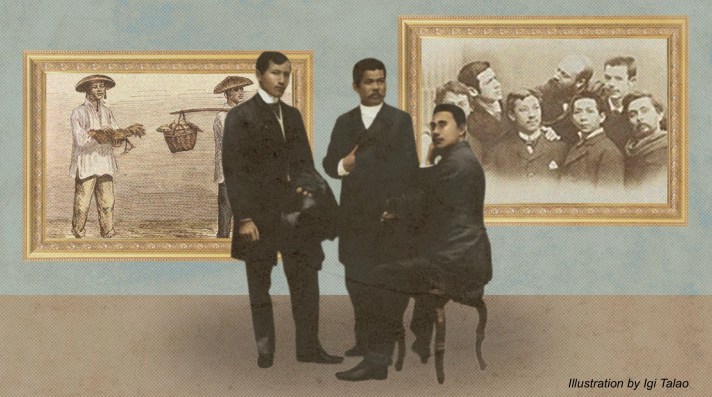
In the days before his execution in December 1896, Jose Rizal, having lost his legal fight for freedom, turned his attention to the battle of language. He wrote 14 stanzas in Castilian, a poem that would become known as Mi Ultimo Adios, and smuggled it out of his cell inside a gas lamp, whispering in English to his sister, Trinidad, to conceal its contents from the nearby guards. Then, when he was delivered his death sentence by the Spanish military governor, he reviewed the paper and made one correction: where they had defined his identity, he wrote indio.[5]

During his lifetime, the term indio, or yndio, had been used to ridicule, humiliate and dehumanize native-born Filipinos. It was used to elevate the Spanish-born Peninsulares, who wielded the political power, and the mestizos, who occupied the lower rungs of society, from most of the population. Rizal was keenly aware of this. He was also aware of how the term, yndio, was used in the Americas to refer to the native peoples of Mexico and territories to the north who were battling for existence against the military expansion of the United States of America. When Spanish officials brought his death warrant to his jail cell, they had already seized his family land, tortured his brother and killed or exiled many of his comrades, but he would not be silenced. When confronted with impossible oppression, Rizal chose to inscribe, to render this word, this self-naming, yndio. Knowing Rizal, the choice was laced with irony, but it is also an act of defiance, and of liberation. For to be truly free, and to redefine our obligation to each other, to this land, to this place called the Philippines, we must first think of ourselves as a free people. And that starts with defining our plural and riotous selves on our own terms.

***

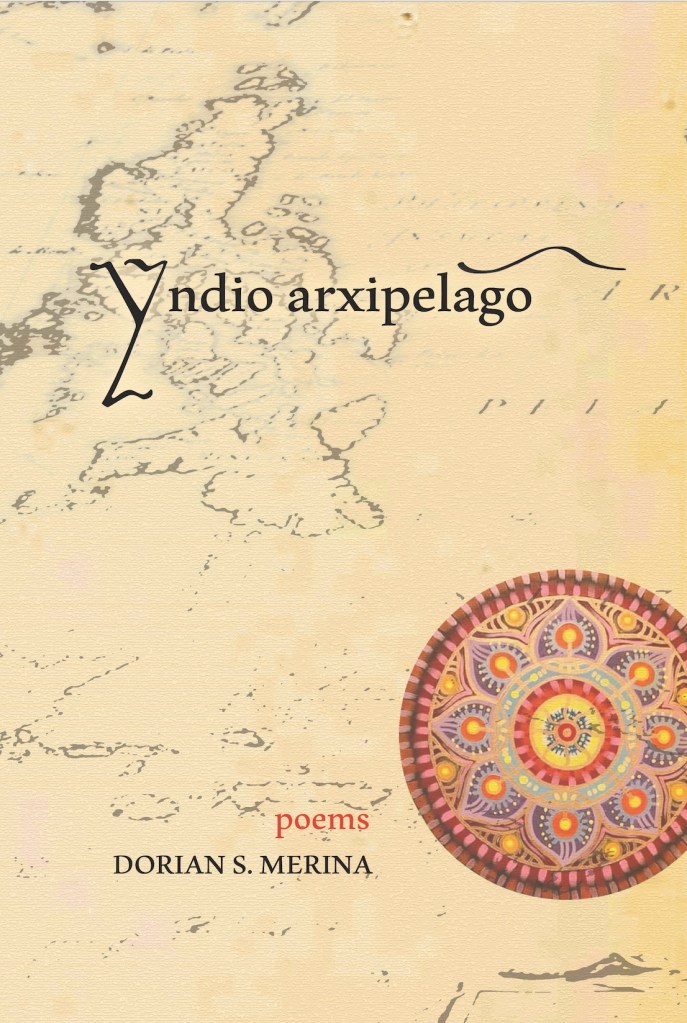
Dorian S. Merina is a poet, translator and journalist. His latest book is yndio arxipelago (University of the Philippines Press).


[1] Dampier, William. Chapter XV in A New Voyage Around the World, London, 1697.

[2] Sinclair, Rebekah. “Righting Names: The Importance of Native American Philosophies of Naming for Environmental Justice.” Environment and Society 9 (2018): 91–106.

[3] Rafael, Vicente L. “Electoral Dystopias,” (Chapter 1) in The Sovereign Trickster: Death and Laughter In the Age of Duterte, Duke University Press, 2022.

[4] Chua, Xiao, Mga Dakilang Pilipino, Amlat Book Publishing House, Project Saysay, 2025.

[5] Anderson, Benedict, Under Three Flags: Anarchism and the Anti-Colonial Imagination, Verso, 2005.

This essay was originally published in Esquire Magazine Philippines in September, 2025. To go to the original publication, click here.

New English Translations of Traditional Lajis

Nu Nunuk du Tukon

AS SUNG BY LAJI SINGERS MELECIO ALASCO, ROSITA ALAVADO

Nu nunuk du tukon, minuhung as kadisi na,
ichapungpung diya am yaken u ñilawngan na.
Kapaytalamaran ava su avang di idaúd,
ta miyan du inayebngan na, ta miyan du inayebngan na.
Nu itañis ko am nu didiwen ko
ta nu taaw aya u suminbang diyaken,
nu maliliyak a pahung as maheheyet a riyes
u minahey niya, u minahey niya diyaken.

The Nunuk on the Hill

The nunuk tree on the hill grew tender leaves and shoots,
then suddenly its crown was broken and I was caught beneath.
Now I can no longer watch the boat in the deep sea
for I stand on the side that is hidden, on the side that is hidden.
I weep in my sorrow
for the vast ocean has made me an orphan,
the pounding sea breakers, the strong currents,
they told me of my fate, they told me this.


U Anak Nu Munamun

AS SUNG BY LAJI SINGER FILOMENA HUBALDE

Anu kadawudawung ku du tukun di Valungut
Dawri a dinungasungay u anak nu munamun,
Ahapen ku na siya nu masen a sahakeb,
Dahuran ku na siya du mahungtub a duyuy,
Udiyan ku na niya a payrakurakuhen
A di chu’a pavulsayi su madahmet a chirin
Du kahawahawa ku niya u kaichay nu anak nu munamun.

The Child of the Munamun

Each time I look down from the hill at Valungut
I see the child of the munamun swimming in the waves,
I will gather her in my finest net
and place her in the deep coconut shell,
to take her home and care for her as she grows.
I will not utter a single harsh word
and take great care not to hurt the feelings
of the child of the munamun.


Laji is the traditional oral poetry of the Ivatan people of Batanes. These poems are new translations into English of the traditional poetry, as sung by the elder singers, who deserve full credit for being the original culture-bearers of this indigenous art form. Both of these lajis were sung in my presence as I recorded the singers and spoke with them about their craft. They generously granted me permission to share their lajis with the broader public. These were first published in Manoa Journal (December 2024). Please visit our ongoing community-based project on documenting and preserving laji at ivatanlaji.com.

Tanaga du Ivatan (Asa, Dadwa, Tatdu, Apat)

Tanaga is a traditional Filipino form of poetry. Each poem is composed of four lines, seven syllables per line, with various end-rhyme patterns. This is an excerpt from a series, titled simply Asa, Dadwa, Tatdu, Apat (One, Two, Three, Four), that uses Ivatan poetic language in the Tanaga form. Originally published in Manoa Journal, December 2024.


Tanaga du Ivatan: Asa

Masalawsaw sicharaw
Malatyat ‘changuriyaw,
Navuya mu u hañit?
Nadngey mu u valichit?

The day is full of wind
As a new dawn arrives,
Have you seen the brightening sky?
Have you heard the valichit sing?


Tanaga du Ivatan: Dadwa

Sumavusavung da na
U dadwa ka bayakbak,
Nu minaydak a chidat
Asa yatus vituhen.

The two bayakbak trees
are flowering:
a lightning bolt flashes,
a hundred bright stars.

Daybreak

Stepping into the smoke
that climbs the mountainside
carrying in its jaws the memory of fire
we vanish

stars flicker where
the sky’s blue dome
catches the smoldering mast

then emerge cloaked in silver ash
the sun’s rays lancing our throats into beads of flame
as we chant the world
into daybreak and dreams.

We found signs in the entrails of wild boars
as our holy women read the slaughter
that darkened the tips of their fingers red
and manacled their wrists in scripture

we chose to live even though
we knew enough of what was to come
or at least what we would become
in order to witness their arrival.

Let me tell you how it begins—

our children run from the shoreline
chased by the last trace of starlight in the sky
my daughter turns to me
cupping a spear of moonlight in her small palm

samurang

our footsteps pursued by echoes
as we leave the shallow mouths of coral
empty in our wake.

From yndio arxipelago (UP Press, 2025); art by Jay Pee Portez, from “Harvest”

New Book of Poetry: yndio arxipelago

Out now from the University of the Philippines Press!

“In this luminous collection of poems, Dorian Merina invites us to sift through the colonial archives to discover who we were before conquest. With each line, he draws us into a journey not toward certainty but toward the unsettling truths buried in silence and omission.”

“yndio arxipelago is a dazzling provocation drawing readers into the intimacies of the first colonial encounters between the Philippines and an emerging Spanish-speaking world…[Merina’s] verses, crisp and riveting, allow us to listen in to historical conversations, experience a scriptworld shifting from the baybayin to Castilian, and share in the internal struggles of a people on the brink of a cultural upheaval.”                                         

View and purchase the book via UP Press.

CREDIT: The header image on this page is from the beautiful artwork of José Honorato Lozano, one of his mid-19th Century paintings depicting Ivatan fishermen.

A Deadly Quake Tests Batanes’ Tradition Of Resiliency

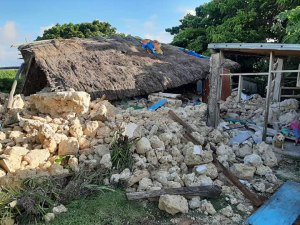
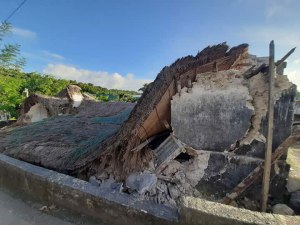
An Ivatan ancestral home destroyed by the earthquake, Barangay Sta. Lucia, Itbayat. (Photo by John Kelvin Ibanes)

I WAS ON OUR FARM when the ground began to shake beneath me. I raised my arms to steady myself against the motion. From the rise, the forested hills seemed to sway around me. The narrow cement path I stood on was littered with brush I had just cleared. I was putting in a new irrigation line to reach our fields, recently planted with lettuce, spinach, papaya, and turmeric. I braced my feet and replaced the machete to my hip. When the shaking stopped, I went back to work, but this time with renewed purpose. Since last night, the earth had been rumbling, but this quake felt stronger and I was anxious to get back to the village to check on my family and neighbors.

After a few minutes, a woman rounded the curve in the road. It was my neighbor and she walked slowly with her bicycle uphill, heading to her field deeper up the mountain. As she approached, I saw on her face the time-worn expression I often see on my fellow Ivatans as they confront uncertainty or calamity: a half-smile, eyes alert.

Did you hear? she asked. There were deaths in Itbayat earlier this morning. She told me her Aunty, who lives next door to us, but is originally from Itbayat, received news from her home island, located 50 kilometers to the north. Her house there was damaged, with a massive crack down one wall. Some relatives were missing. I hurriedly packed my things, strapping the kalapay, our traditional farm basket, across my back. I remembered previous earthquakes that had struck in the 1980s and ‘90s, damaging walls of homes and dislodging pipes underground. Could this be as bad? I thought. The reality, it turned out, was much worse.

***

I live with my family on Sabtang, one of the three inhabited islands of Batanes, the smallest and most remote province of the Philippines. We are close enough to see, from the hill above our village, Itbayat to the north, near the epicenter of the early morning earthquake that struck on July 27, 2019. The earthquake I felt up on the farm hit at 7:37 a.m. and was magnitude 5.9, according to Phivolcs, the Philippine Institute of Volcanology and Seismology. It would be just one of more than 200 that would hit Batanes in the span of three days. While our island of Sabtang was spared damage or injuries, the residents of Itbayat were not so lucky. The earthquake at 4:16 a.m. turned out to be especially devastating. It was magnitude 5.4, but hit closer, just 12 kilometers away from Itbayat. Before dawn, walls of ancestral homes tumbled. Roofs collapsed. Both the hospital and the public school were badly damaged. The island’s historic church, Sta. Maria de Mayan, lost its prominent tower, as it first crumbled, then later, came crashing down.

Nine people were killed, including a 10-month-old baby and a 5-day-old infant. Dozens more were injured. Many families fled their homes – homes which had kept them safe through many past typhoons suddenly posed lethal risks. The survivors would be left without electricity or running water for days, huddled at the town plaza as aftershocks rumbled across the ocean.

***

When I got back to our village of Savidug, I gathered with neighbors in the street, exchanging what news we had. At one point, as we stood outside our homes, the ground moved again. Electrical wires tossed above. My neighbor held the side of her house to steady herself. When it stopped, we rushed back inside our homes.

Batanes is known for its remoteness, and Ivatans are no strangers to hardship. We are 681 kilometers from Manila and 235 kilometers from Aparri, on the northern tip of Luzon. But we are just 150 kilometers away from Taiwan. Our islands are surrounded by the strong currents of the Pacific Ocean, the Philippine Sea and the Bashi Channel, to the north. Nearby lie underwater volcanoes and seismic rifts. Our mountains are ridged with volcanic craters. We are reminded daily of the power and force of nature as we glance at towering Mount Iraya, a volcano that last erupted in the 15th Century. It rises 1,000 meters on the north side of Batan island, just outside of Basco, the province’s capital.

Some 17,000 residents live across the province, most of them Ivatan, the recognized indigenous tribal group that has made the islands their home for centuries. Most residents live in Basco, which has the main airport and shipping bay for vessels that carry goods from Manila. Our island of Sabtang has just 1,600 residents. In our village of Savidug, there are just over 200. (When our neighbor had a child in 2017, followed just two months later by our own daughter, we joked of a population boom coming.)

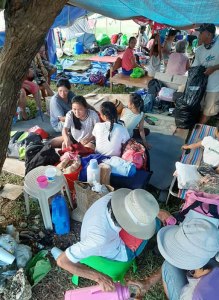
Survivors of the July 27, 2019 earthquake gather at Itbayat Town Plaza as aftershocks continued to rock Batanes. (Photo by John Kelvin Ibanes)

The province, famously, is battered by strong winds and typhoons. Most recently, Typhoon Ferdie, a Category 5 storm, ripped through the islands in September 2016 leaving major damage in its wake, but no casualties. The isolation and harsh conditions have built an enduring sense of self-reliance and communal commitment among Ivatans. We still gather regularly to repair roofs together. We rely on communal pastureland and cogon reserves. We work as a group to fish, to plant and harvest crops and to prepare for our fiestas and other religious and cultural events.

But the island of Itbayat is even further north than Sabtang or Batan island, even further remote. Though in recent years Batanes has received a surge of tourists, very few visitors ever make it to Itbayat. Its high cliffs and rugged terrain make it hard to access. When I visited in 2011, I saw the local people’s friendliness and cooperation on full display. I was there to document and record Laji, the oral poetry of Ivatans. And as I visited the elders in San Rafael, one of their main towns, people welcomed me warmly and shared stories. Their version of Laji was also distinct from the style on Batan or Sabtang islands. It had different melodies and lyrics – and a haunting quality that residents said was influenced by isolation.

When the earthquakes on July 27 struck, this resiliency was on full display. Neighbors, many just in sandals, grabbed crow bars and shovels and rushed to damaged homes. They began clearing debris together. In one case, a group pulled a survivor from the rubble, carrying his limp body though thick dust and across piles of rocks to safety.

Across the islands, the rest of us called, texted and shared news on social media. There were stories of hope, such as the group of fishermen who donated their entire catch to survivors in need of food. And there were signs of despair, such as the 71-year-old widow who narrowly escaped with her life as her house crashed around her. After the quake, she was left to care for her daughter and four grandchildren. “Sometimes, I feel deserted,” she told a reporter as she took refuge in the town plaza. “What is my life now? What will become of me?”

One particularly troubling image emerged: it was a photo posted from Itbayat of people gathered in the plaza. In the foreground, white sheets covered the outlines of three bodies lined up on the grass. One of my aunts, who lives in Basco, where the second quake was felt strongly, posted: Ichasi po yatenHave mercy on all of us.

Survivors in Itbayat were left without electricity or running water for days following the deadly earthquake. Nine people died and scores were injured. (Photo by John Kelvin Ibanes)

***

On Sunday morning, July 28, we watched from our bedroom window as military planes flew overhead and a convoy of helicopters carried President Rodrigo Duterte to Basco, then to Itbayat to oversee the recovery efforts. (He would be followed four days later by a visit from Vice President Leni Robredo, who helped distribute aid.) In Basco, Duterte pledged 40 million pesos for recovery, aimed primarly, he said, at building a new health clinic on Itbayat. Though welcomed, the funds fell well short of the estimated 293 million pesos in damage that the earthquakes left. More than 900 families, or nearly 3,000 people, had been displaced or affected, according to the Department of Social Welfare and Development – a staggering number, one that essentially includes the entire population of Itbayat. One barangay, Raele, was left with nearly every structure “totally damaged,” according to the Department of Public Works and Highways, which assessed the damage in each of the island’s five towns. By Saturday night, a mass funeral for six people had taken place. More would come.


“Many families fled their homes – homes which had kept them safe through many past typhoons suddenly posed lethal risks. The survivors would be left without electricity or running water for days, huddled at the town plaza as aftershocks rumbled across the ocean.”


The people of Batanes led the local response. Musicians in Basco held a benefit concert, called Musikahilyan, a word play on the Itbayat term for “town-mates,” kahilyan. Nurses and medical staff across the province mobilized. In Savidug we gathered supplies and put together boxes of canned goods and food to send to Itbayat. Families here are deeply connected. In addition to our neighbor, whose home was cracked, another neighbor across the village mourned the death of two relatives. And our neighbor next door, who is also from Itbayat, described attending the school that was badly damaged and his repeated efforts to seek up-to-date information about his family.

***

Two nights after the strongest quake, another rumbled through. Though much milder, it still shook the walls of our home. It hit in the middle of the night. The village was quiet and dark. When the shaking began, I quickly lifted my arm above my 20-month-old daughter, who slept between my wife and me in our bed pushed against the wall. My body turned to shield her. When the shaking stopped, we fell back asleep.

The next morning at breakfast, my wife reminded me of the quake. I realized that, in my drowsiness, I had forgotten the incident. I then remembered my attempt to protect my daughter, who continued to sleep soundly next to us. It was instinct. In practical terms, it was probably ineffective, but the act, however simple, made me think of my fellow Ivatans in Itbayat who also were trying to protect their families, their homes, their communities, in the face of powerful forces. They now confront the difficult task of rebuilding, of healing and of recovering. And we should all be there for them, our kahilyan, in their time of need.

Positively Filipino, August, 2019