How we imagine ourselves in history could be the key to changing our future.
Esquire Magazine, September 25, 2025 — WHEN THE ENGLISH EXPLORER WILLIAM DAMPIER sailed into the remote, storm-battered islands of the northern Philippines in August 1687, he marveled at the emerald-green hills and steep cliffs that rose from the ocean. After a long voyage at sea, he was also relieved to find that the valleys held “brooks of fresh water which run to the sea in many different places.” Expecting to find the small islands uninhabited, he was startled when people with “dark copper-colored skin” and “hazel eyes” greeted his ship from the shoreline with curiosity. He noted that both the men and women wore elegant, dangling hoops of gold from their pierced ears, and he lamented not having enough supplies to trade for the precious metal. But during his stay he took possession of something that he hoped would be far more valuable: the names of the islands themselves. In a fashion typical of the era, he bestowed upon the largest island a European name, Orange, after the Prince of Orange, and upon the other two, Grafton and Monmouth, after Dukes back in England.
When he departed two months later, he carried with him detailed maps of the islands inscribed with the new names. His published account of the voyage[1] would become a sensation throughout Europe, the earliest written record of the area by a man who would go on to circumnavigate the world three times. But there’s a twist to his story. The islands called Orange, Grafton and Monmouth didn’t exist. They never did — at least not beyond the imagination of an English explorer and his crew. Those islands already had names, called by the people who had been living there for thousands of years. They are: Itbayat, Batan and Sabtang. The names given by my ancestors. Names that still endure today.
The act of naming — whether a person or thing — is an act of knowing and discovery. It also carries with it the potential to influence all other aspects of our lives. As the scholar Rebekah Sinclair points out, “A name is a site of power.” And that power can “create or destroy worlds, build or raze relationships.”[2] As Filipinos, we have lived through many different named identities. Often, they are multiple and co-exist in riotous expression. We can think of this as a sign of our hybrid existence, or the lineage of a mestizaje culture that springs from a myriad of origins. Try as they might, our multiple colonial masters failed to restrict or narrowly define our concept of ourselves, which has allowed for fluid and adaptable personas. It can also lead, however, to dissonance and contradiction. But the terms we claim for ourselves matter far beyond our individual identities.
Take, for example, the term Filipino, which has meant different things at different points in our history. During the Spanish colonial era, Filipino was used alternately to distinguish native residents of the colony from those with “pure” Spanish blood, such as Peninsulares or Insulares, or to refer to those with a mestizo background, or to distinguish indigenous people of the islands, as in Indios Filipinos, from those of other colonial territories in the Americas. The term itself comes from Spain’s King Philip II, who never set foot on the archipelago and whose ultimate design for the islands and its people was subjugation and exploitation. It’s a testament to their creativity and courage that Filipinos have made the term their own, often invoked with nationalistic pride.
To claim Filipino is thus to acknowledge the commitment and sacrifice that people throughouthistory have demonstrated to assert this identity. It’s a hard-won victory. But it’s also important to note that the identity marker has been harnessed at times by those who aim to demean and exclude others from the national project, such as minority indigenous and Muslim groups, even when they have a rightful claim to their local homelands.
Recognizing this creates the space for the other cultural or linguistic markers that help orient us in this land. Whether Tausug, Waray, Igorot, Illocano or Maguindanaon, these terms offer additional dimensions to our identities.

I am a tribal member of the Ivatan people of Batanes, where Dampier landed more than three centuries ago. I recognize this term, not just because of my ancestry, but because being Ivatan expresses a current and ongoing relationship with the people and the place. It’s where my family lives, where my child is being raised, and where my relatives and I farm and fish to sustain ourselves and our community. I-vatan literally means a person from the island of Vatan. It locates us to a specific place and history, and establishes a relationship that is distinct and special. It also engenders an ethos of protection and respect — for the land, history and the ecosystem. For why would we destroy or degrade Vatan? That would violate our conception of ourselves and our community. Instead, like our ancestors before us, we are encouraged to ensure that the place survives for the next generation. Even though I was raised in the Ivatan diaspora, and I also have German-Irish ancestry, this identity claims me, and I, in turn, recognize it with pride.
But why does all this attention to names or identities matter today? For me, the answer is simple: identity is not the result or end of an inquiry. Rather, it is a gateway to a broader and deeper understanding of relationships — how one relates to oneself, to a specific place, and to a community. And it is ever-evolving. If we see identity in this way, and pay attention to the terms we’ve used for ourselves throughout history, the implications for our contemporary world become urgently clear.
***
Judging by recent events, one of the most pervasive and insidious problems we face today is corruption. More than a mere flaw in government practice, corruption sparks outrage because it is an affront to our social pact to respect and care for one another. To be sure, corruption is often fueled simply by greed and a lack of integrity. But it’s also a reflection of who we imagine ourselves to be, especially in relation to the responsibilities we honor (or ignore) to our fellow citizens and the society at large. If we think of ourselves as part of a transactional or patronage system, one in which every individual is out for themselves, then corruption, bribery and theft are the logical means through which to gain an upper hand.
But this dynamic, and this view of ourselves, is the result of an historical process. Vicente Rafael traces its origins to Spain’s rule in the late 17th Century, when colonial officials selected a few local elites to compete for positions of limited power, and friars in the church had ultimate veto power over candidates.[3] This system was further refined under the Americans and, later, the Japanese during wartime occupation. For them, the aim was never to foster a thriving, functional democracy through electoral politics. Instead, Rafael argues, the goal was to encourage and reward collaboration from the elites and to manage and suppress the genuine calls, and agitations, for democracy. This unequal rule was further enforced by paramilitary groups and violent repression. Today, we are left with this legacy. In name we have a liberal constitution and independent branches of government, but we live in a reality in which the vast majority of Filipinos feel excluded from the democratic process, and preyed upon by those in power. The recent mass protests are a vivid display of this fury.
But what if — instead of this transactional and patronage system — we thought of ourselves and how we relate to each other differently? Perhaps by using concepts such as kapuwa, bayanihan or, as we say in Ivatan, kaydian. These terms prioritize the bond of interdependence, and reliance on one another, and they are embedded with the notion of cooperation and well-being. Guided by these terms, to steal from another, or to cheat a public fund, would be anathema to our survival for it would threaten our own families and the ability of our community to provide for itself. Of course, language alone will not be enough to reverse such deep-seated corruption. We also need concrete policy reforms that enforce accountability and transparency. But language is essential to ensure that these reforms lead to lasting change.
As the historian Xiao Chua points out, the term we use for a government worker, kawani, has roots in Javanese, and describes when someone serves others without expecting anything in return.[4] Imagine if we reclaimed this term as a way to redefine our obligation to one another? Kawani. It also leads us to another, related word that provides an even more expansive view of our potential for change, bayani.
***
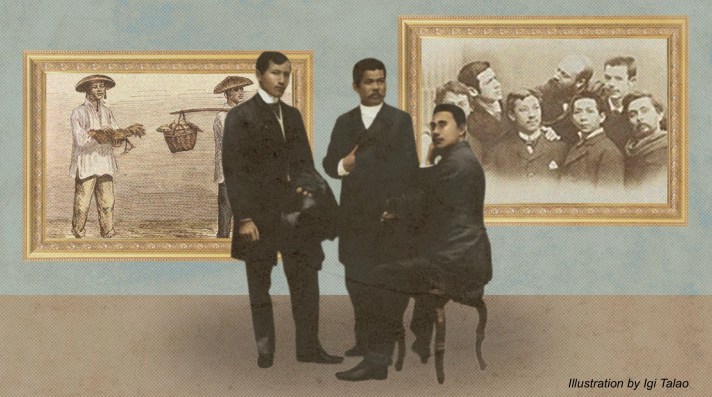
In the days before his execution in December 1896, Jose Rizal, having lost his legal fight for freedom, turned his attention to the battle of language. He wrote 14 stanzas in Castilian, a poem that would become known as Mi Ultimo Adios, and smuggled it out of his cell inside a gas lamp, whispering in English to his sister, Trinidad, to conceal its contents from the nearby guards. Then, when he was delivered his death sentence by the Spanish military governor, he reviewed the paper and made one correction: where they had defined his identity, he wrote indio.[5]
During his lifetime, the term indio, or yndio, had been used to ridicule, humiliate and dehumanize native-born Filipinos. It was used to elevate the Spanish-born Peninsulares, who wielded the political power, and the mestizos, who occupied the lower rungs of society, from most of the population. Rizal was keenly aware of this. He was also aware of how the term, yndio, was used in the Americas to refer to the native peoples of Mexico and territories to the north who were battling for existence against the military expansion of the United States of America. When Spanish officials brought his death warrant to his jail cell, they had already seized his family land, tortured his brother and killed or exiled many of his comrades, but he would not be silenced. When confronted with impossible oppression, Rizal chose to inscribe, to render this word, this self-naming, yndio. Knowing Rizal, the choice was laced with irony, but it is also an act of defiance, and of liberation. For to be truly free, and to redefine our obligation to each other, to this land, to this place called the Philippines, we must first think of ourselves as a free people. And that starts with defining our plural and riotous selves on our own terms.
***
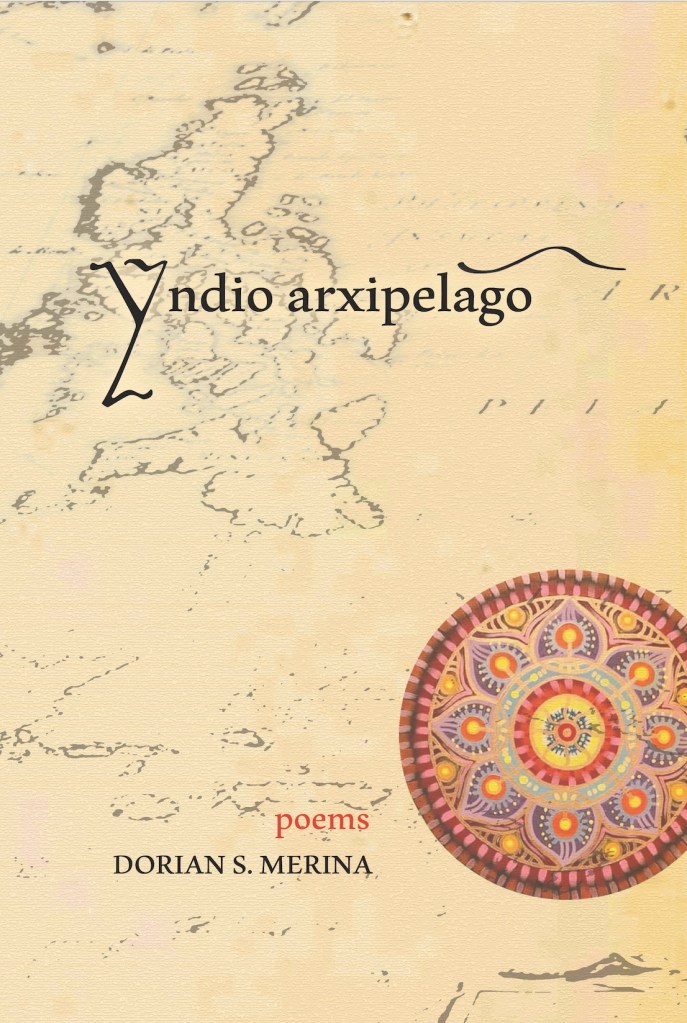
Dorian S. Merina is a poet, translator and journalist. His latest book is yndio arxipelago (University of the Philippines Press).
[1] Dampier, William. Chapter XV in A New Voyage Around the World, London, 1697.
[2] Sinclair, Rebekah. “Righting Names: The Importance of Native American Philosophies of Naming for Environmental Justice.” Environment and Society 9 (2018): 91–106.
[3] Rafael, Vicente L. “Electoral Dystopias,” (Chapter 1) in The Sovereign Trickster: Death and Laughter In the Age of Duterte, Duke University Press, 2022.
[4] Chua, Xiao, Mga Dakilang Pilipino, Amlat Book Publishing House, Project Saysay, 2025.
[5] Anderson, Benedict, Under Three Flags: Anarchism and the Anti-Colonial Imagination, Verso, 2005.
This essay was originally published in Esquire Magazine Philippines in September, 2025. To go to the original publication, click here.

 Dorian Merina